

Theology and Creativity: Incarnationally Shaped
Part 3 of 4 On Developing Theological "Tools" for Worship Leaders

Hey Friends! Welcome back to a 4-part series on “Theology and Creativity” in which I will offer three theological “tools” to help worship leaders, pastors, service planners, and creatives think through how their local church worship practice is shaped.
If you’re just finding this series, I’d encourage you to check out my Substack homepage to read the Introduction and Part 1.
Look for Part 4 on Friday, July 31!
I pray these are helpful to you and your church!
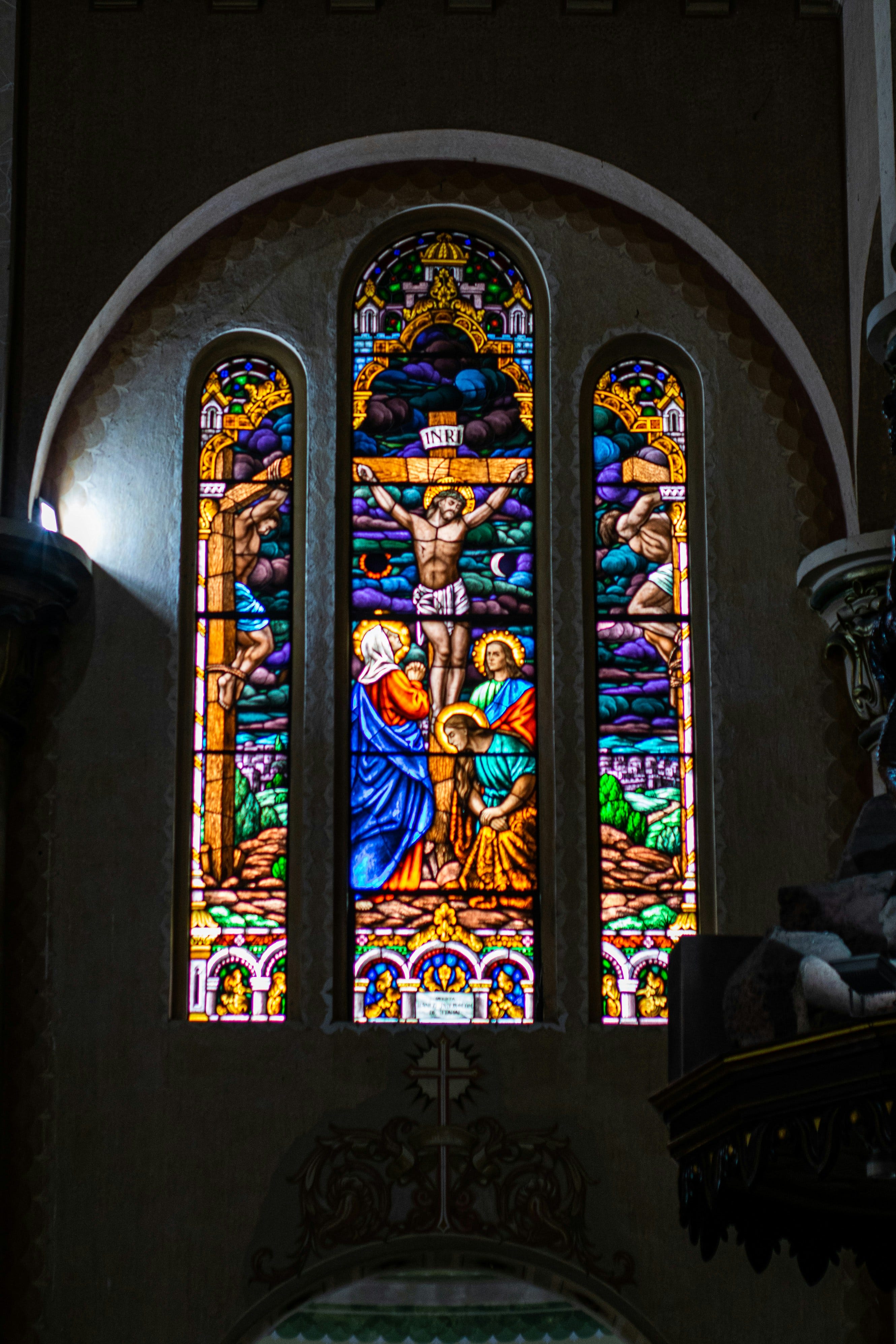
Tool 2: Incarnationally Shaped
A question that is somewhat startling to Protestants (evangelicals especially), but is quite helpful in reminding us of the radical good news of the Incarnation, asks, “Is Mary the Mother of God?”
The correct answer is yes. But our reflexes often say no.
I remember when Beth Felker Jones asked something like this in our Christian Doctrine class a couple of years ago. She deftly guided us to understand that to say, “Mary is the mother of God,” isn’t a statement about who Mary is, but a statement about who Jesus is.
I have since found this simple question an incredibly helpful reminder of the reality of God becoming human and Jesus of Nazareth being God. There is so much awe and mystery in this truth, which is the core reality and basis for all of Christian worship. We must take the Incarnation seriously, with all of its implications.
Two of those implications are particularly important for thinking theologically about creative expression in our worship gatherings that I’d like to lay out here.
1. The Incarnation demonstrates embodiment
The well-known words of John 1:14 that “the Word became human and made his home among us,” are not just a simple statement about Jesus’ birth. They are an affirmation about the goodness of our bodies, languages, cultures, and the particular perspectives we all have in our times and places in history.
To put it another way, we should use bodies, languages, and cultures the way God reveals through the Incarnation in our worship.
Because God chose to become human, God, in Jesus, took on a body. God in Jesus, took on a language. God in Jesus took on a culture. In doing so, God showed that these things are not bad in and of themselves - God could not inhabit something that was inherently evil after all - but are good. To inhabit a context, a body, a culture, and a language are what we humans were made for.
This is not to say that there aren’t also problems. Because of sin in each of these aspects of human existence, we know that each of these can be manipulated and twisted towards evil purposes. But it is to say that God created these things ultimately as good. And if they are good, they should be valued in a Christ-shaped way in our worship.
To put it another way, we should use bodies, languages, and cultures the way God reveals through the Incarnation in our worship.
As we consider what matters in our worship gatherings, we should consider things like languages that are representative of all the people in our church. The bodies of men and women - as representatives of humanity together - being involved in the gathering.1 And ensuring that we are speaking in a way that connects to the local context in which our church is located.
All these things, when utilized thoughtfully and prayerfully in our worship gatherings, transmit an incarnationally shaped posture that honors our own God created embodiment and helps us to be like Jesus.
2. The Incarnation demonstrates “downwardness”
Not only does God affirm our humanness as ultimately good through the incarnation, but even more deeply, God affirms a particular way of being human in how the Word lived among us in Jesus.
The apostle Paul offers a significant insight into this when he commands the church in Philippi to model their way of living after Christ, who,
“Though he was God, he did not think of equality with God as something to cling to. Instead, he gave up his divine privileges; he took the humble position of a slave and was born as a human being. When he appeared in human form, he humbled himself in obedience to God and died a criminal’s death on a cross.” (Philippians 2:6-8).
Paul recognizes that Jesus is the suffering servant that we are to imitate by laying down our lives for each other just as he did.
This means our worship gatherings must become places where we are shaped into a posture of humility. Our worship gatherings must move us more toward being suffering servants like Christ, instead of places where our ego is expanded.
While many churches are trying to create trascendence, Jesus models downwardness.
I’m not saying turn our worship gathering into “woe is me,” self-flagellating environments, but rather, spaces that help us imitate our Lord’s own setting aside of all power and privilege to be with us.
What does this mean for worship and creativity?
There are many ways to answer this question, but I’d like to focus on two in particular:
How these insights teach us about power, and by extension, language in our worship gatherings.
Power
When I say power, I am not talking about the power of God. I am talking about what David Fitch calls, “worldly power.”2 The way we typically imagine getting things done in the world. Or as Jesus described it, “lording over each other” as the Gentiles do (Luke 22:24-26).
In this kind of power arrangement, one with more social influence, whether it be political, economic, or other social status, leverages that role to effect an outcome. By the way, this could be done for good or for ill, but it is still “worldly power” which, Fitch argues, is distinct from God’s power.
It can certainly “preserve” this world from going completely off the rails, but it cannot redeem the world.
As we think about a typical gathering space for worship, is there wordly power at work?
There is usually a raised platform, there might be face lights and backlights in a darkened room, designed to draw your attention to what and who is on the stage.
Only those on stage have microphones. If you don’t have the platform, lights, and mic, you don’t get to speak or lead the room. This is a simple version of worldly power.
Now these tools are also VERY helpful in larger rooms to enable others to see and hear what is going on. It isn’t all bad. But we need to understand that when a new person comes in, they are not necessarily walking in, seeing that person on stage, and thinking of them as a suffering servant.
Coming in with all of their pre-loaded worldly standards, whoever is on stage appears to be the most important person(s) in the room. If we are going to model “downwardness” as Paul describes, what might we do to disrupt those assumptions?
Well, the early church figured out one very creative way of doing just that.
It is said that the bishops presiding over the worship gatherings would be seated at the front, and as people would come in, they would be welcomed to sit down.
However, if a poor person came into their gathering, the bishop would personally get up from their seat and greet them, escorting the poor parishoners to the seats of honor at the gathering. The creative use of space in this instance powerfully disrupted the normative assumptions about who, or what, is most important in this social setting.
Often, we think about reserving seats in the front row for staff, so-called “VIPs,” and other people in our church who also usually carry some level of worldly power. What if our reserved seats were for the least of these?
Being Incarnationally shaped can be applied in so many ways in our worship gatherings.
For example, last year on Good Friday, our church rearranged our chairs into somewhat of a circle with a large cross in the middle. The worship team stayed on the stage without lighting in order to intentionally keep our focus on the cross which was lit to draw attention towards it.
Another example in our church is how we take every fifth Sunday to have the children stay with us for the entire worship gathering, not just the music as we normally do. We intentionally make space for “All-Ages” through the music and message because Jesus not only said, “let the little children come to me,” but that we must become like one of them to enter his kingdom (Matthew 18:1-5).
There are so many possibilities to creatively subvert “worldly power” assumptions in our worship spaces which would better reflect the reality of Incarnation.
Language
A second implication I want to mention is that of language, which naturally follows from any discussion of power. As discussed above, Incarnation affirms our bodies, languages, and cultures to the degree that all humans inhabit a specific context in which God is willing to work in and through.
God does not erase these realities in order to meet with us. Therefore, language becomes a powerful creative force to make our worship gatherings Incarnationally Shaped.
Whatever the majority language is in your church will obviously be the one that is mostly used, yet there may be others in your congregation with a different native tongue.
What might be communicated to these members of our church if we offered a prayer, a song, a reading, a sermon, or something else in those languages?
It might help a church recognize that they are part of one holy catholic church, a global community, unique yet unified to something beyond their worldview and the language that shapes it.
It would remind us that we all embody a subjective culture and perspective that God is at work in, but is not the only culture God is at work in. Further, it would teach us that in God’s kingdom, the majority doesn’t rule; those with advantage intentionally lay down their advantage out of love for others.
These are probably some of the most challenging suggestions I will make in this series. That is probably appropriate, however, since the incarnation is challenging. How could an all-powerful God, with limitless resources, advantage, and prestige, lay all of it down and “make himself nothing”?
But when it comes to our gatherings we often balk: How do we just rearrange everything so the stage isn’t prominent? How could we make spaces of honor for the socially marginalized? “That is impractical and inefficient for how we do church,” we say.
Perhaps these questions demonstrate a lingering unbelief in incarnation.
The incarnation itself was an incredibly inefficient way to save the world. Yet we need to take it more seriously to shape more faithful worship gatherings because, implicit in everything I’ve written here, our worship practice is not only about what we do it is about how we do it.
As always, let me know ways in which you are utilizing this theological tool already. How has this given you a new imagination for what’s possible?
Leave a comment and let me know!
I won’t go into this particular problem in this article. There are some particular things about men and women and are bodies in worship that I’ll address in another essay at a later time.
David Fitch, Reckoning With Power