

Theology and Creativity: Triunally Focused
Part 2 of 4 On Developing Theological "Tools" for Worship Leaders

Welcome to Part 2 of 4 in a series of articles aimed at providing theological “tools” for worship leaders, pastors, creatives, and anyone else involved in planning worship gatherings. Today, we’re getting into the nitty-gritty with the first tool: being Triunally Focused.
If you’re just finding this series, I’d encourage you to check out my Substack homepage to read the Introduction.
The last two parts of this series will be published between now and the end of July
I pray these are helpful to you and your church!
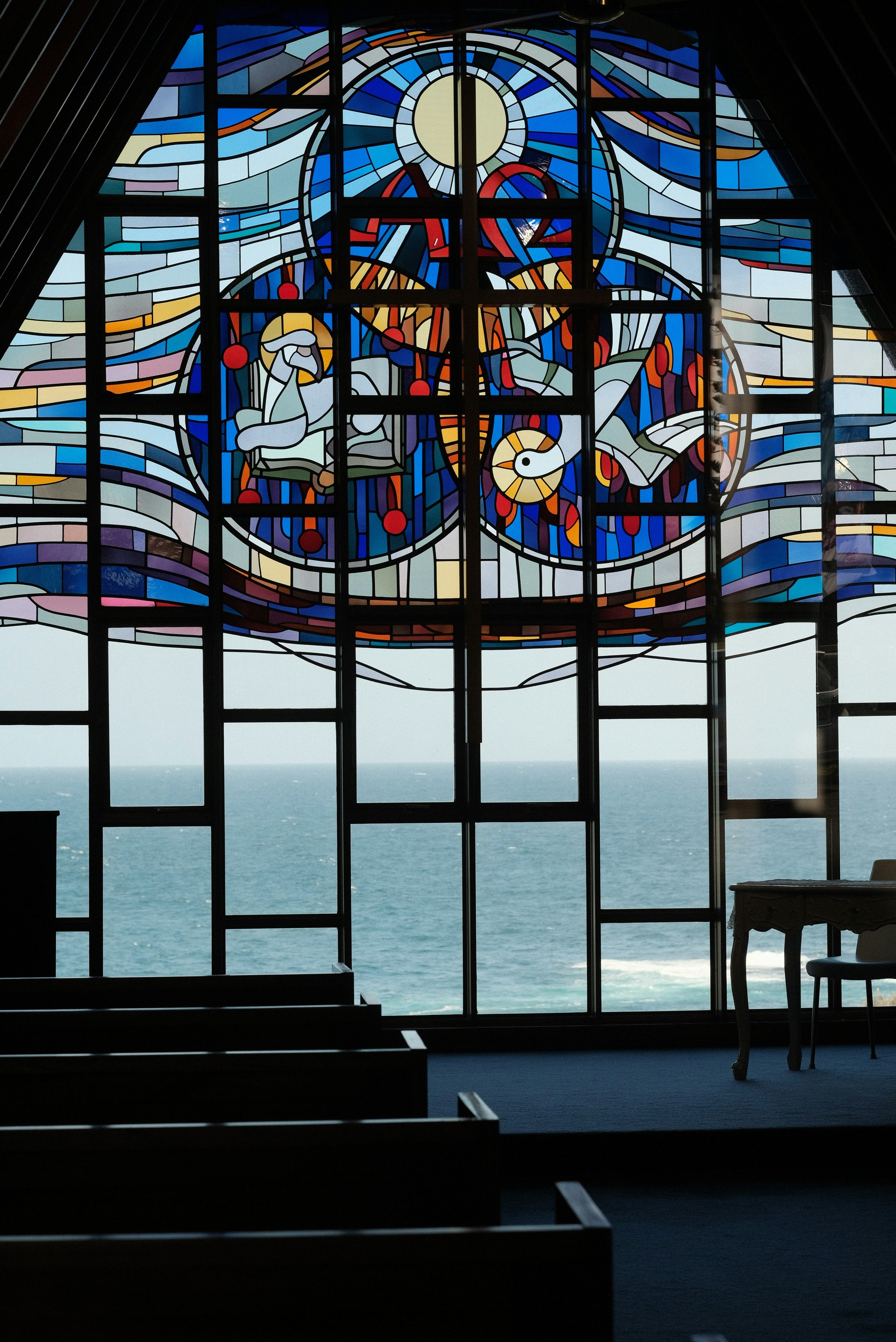
Tool 1: Triunally Focused
What is something your church would consider a non-negotiable for your worship gathering? What can you absolutely not do without?
When I asked this question in a seminar, I got a lot of great answers: prayer, scripture/preaching, worship, communion. All true and good! But if we’re honest, we sometimes freak out when there’s no bass player, or the mix isn’t right, or the church “just isn’t as engaged this week.”
That anxiety and frustration are understandable, but it also tells us what our souls really believe to be the non-negotiables in our worship gatherings.
Because of this, we spend a large amount of time focused on changing, tweaking, and directing these aspects of our gatherings instead of remembering that the only non-negotiable in our worship gatherings is that God is there.
This means we have to answer the very basic question, “Who is God?”
If we are going to speak faithfully about who the God is that Christians worship, then we need to speak about God as Father, Son, and Holy Spirit.
Since our culture has a very faint Judeo-Christian heritage, many people would say “I believe in god,” but do so in some vague and unspecific way that doesn’t necessarily refer to the God of Abraham, Isaac, and Jacob revealed in scripture, ultimately in Jesus, who shows us the Father, and was empowered by the Holy Spirit.
As Christians, when we gather to worship, this is the specificity we are aiming at when we focus on God and want God to be present with us in our worship.
This is not tokenism to say God must be present. To say we want God with us in worship is to name the reality that we cannot truly worship apart from God.
In truth, it is only because God has created all things and sustains all things; despite our sin, entered history to redeem all things; and only because God will make all things new at the end of history, that we are even capable of worship in the first place.
Our worship does not depend on any form; it depends on the Triune God.
Robert Webber, the great Ancient-Future liturgist, wrote that God’s work in history, “is the essence of worship. Take it away, and there is no worship. Remember to proclaim it, enact it, celebrate it, and worship happens.”1
This is a profound statement.
We don’t generate worship. We proclaim what God has done. We do not conjure up or hype up our churches to worship. We enact and embody what God has done, and then we celebrate what God has done. When we do this, we will not be able to stop worship from happening.
Think about the last time you heard someone share a powerful testimony of healing or experiencing freedom because of Jesus. There is something about hearing that story that makes you go “wow”.
That “Wow” is true worship. It is a response to God, Father, Son, and Spirit, who has entered history to redeem and restore us. And it makes our worship gatherings far more authentic and engaging when we simply “proclaim” instead of “conjure.”
I’m reminded of something Dietrich Bonhoeffer once said in a sermon reflecting on the oft-asked question, “Why is church boring?” He said, “Because in the end we ourselves do not want to believe that God is really here among us, right now, demanding that we hand ourselves over, in life and death, and soul and body.”2
Isn’t that so true?
If we do not focus on the Triune God being present with us, shaping history in the past, present, and for the future, then there is no worship, and we might as well go find a good spot for brunch on Sundays!
So what does this all have to do with creativity?
When we stop telling the story of God entering history, church gets boring. It becomes dull and lifeless. When that happens, instead of being a tool, creativity becomes a temptation. It becomes a temptation to help us hype up and entertain. To wow and excite. We start to “need” creativity to get people to come back.
In short, when we are not Triunally focused, creativity becomes an idol.
The good news is that we do not need to hype anything. Creatures cannot hype the Creator. All we can do is be in awe.
What might help us?
Usually, the opening of a worship gathering is called the invocation. It is a time to invoke the presence of the Triune God we say we are focusing on. Through the invocation, there are all kinds of ways to draw people’s attention to the God who makes worship possible.
It could be a simple prayer, inviting God’s presence. It could be a moment to name God as Father, Son, and Holy Spirit, while waiting in a silent moment.
Reading a scripture, or a prayer from Christians of the past, could help draw our attention to God. It may even be a short video, proclaiming who God is and what God has done. The possibilities are really only limited by whether or not it helps us draw our attention to the Triune God.
This practice aids our creativity immensely.
When we are in awe, our creativity is not focused on what the church down the street is doing, or on what the latest trend is in the “Worship Industry.” We are instead much more playful because we are creatures in awe of a Creator.
This opens up the bounds of what is possible creatively and what counts as creativity. Since we are not focused on what could excite people, we are free to focus on creatively proclaiming, enacting, and celebrating the story of the Father, Son, and Spirit in history, in our church, and in our lives.
So what do you think? Is being Triunally Focused a helpful tool for you and your church? I’d love to hear how this is already at work in your church or how this has helped open up new possibilities for you. Leave a comment and let me know!
Robert Webber, Worship Old and New.
Dietrich Bonhoeffer, Sermon, London, Oct 22, 1933.
Well written. At worship Practice the other evening, I said that the simplest and oldest song we sang was just so powerful- meaning it ushered me into Gods presence-not because it was so catchy but because it's focus was on exalting God- it gave glory to the Creator.
Love this, Andrew! I've been thinking about this a lot because of the class I am currently in, and the topic of how the Trinity impacts the life of the church is a pretty big topic. I've been spending time in Psalm 84, and I have been learning that worship changes and forms the world around us, and the only way that happens is by affirming the Trinity as the center and the one who does/changes things. So I think this is neat to think about on a large scale, practically within corporate worship and practical worship.
I thought this was interesting and very insightful.