

Worship Leaders: Don't Imitate the 'Industry'
On the difference between consumer preference and church practice in our music

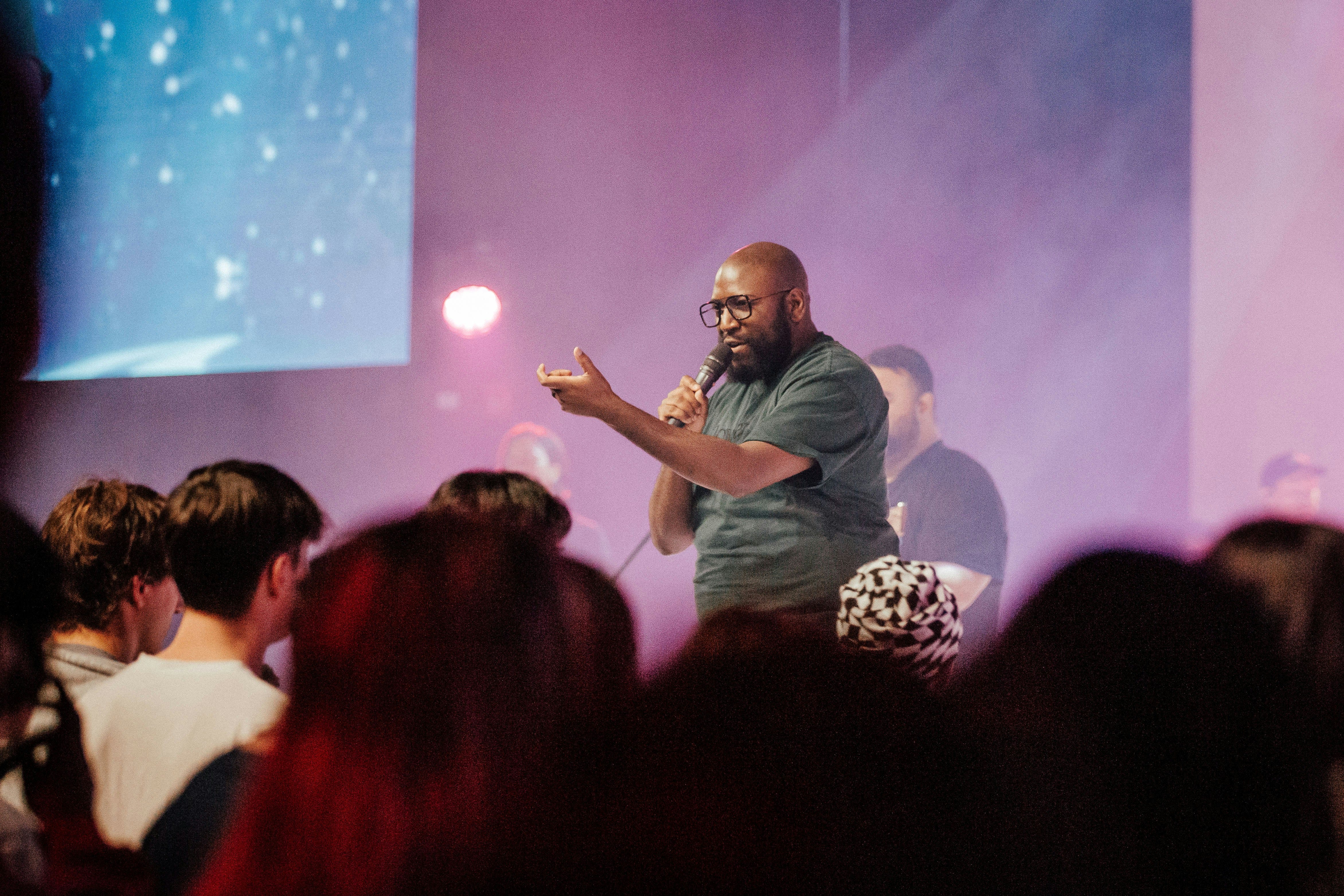
As a worship pastor and now pastoring a church, I have felt the pressure to produce at a certain “level” on Sunday morning.
I have had conversations with teams about “every Sunday being Easter Sunday” as we prepare for rehearsal.
I have carried a sense of obligation to take my visual and sonic cues from the latest worship song that’s been released on YouTube.
I have felt overwhelmed by yet another new song coming out that is an absolute “banger,” and wondering how in the world we can fit it into the rotation.
And now, having almost two decades of experience as a worship leader, I find myself having conversations with worship leaders, pastors, and teams in which they share a similar sense of pressure to reproduce what they see and hear coming out of Nashville or popular mega churches.
I notice as I scroll through my social media feed, small to medium-sized churches trying (no offense intended, but usually badly) to make their churches look like the worship video or mega church livestream they’ve been watching.
Does this resonate with you?
If so, I’d like to help us all see more clearly what we’re doing: the Church is trying to imitate the Worship Industry instead of being the Church.
What Is the Church? What Is the Worship Industry?
The Church is where worship happens. The church is the baptized and redeemed body of Christ that comes together, submitted to Jesus in the power of the Holy Spirit, to proclaim good news. It is where, through singing, scripture, communion, and prayer, we are a living witness to God’s work in the world.
The Worship Industry - by which I mean the complex socio-economic network of artists, musicians, producers, studios, management, labels, mega churches, conferences, and church resourcing companies and institutions - would not exist if it were not for the local church.
All of these other places where we find “worship” are what Constance Cherry calls “para-worship.”1
In other words, the Worship Industry is supposed to be derivative of the actual worship practice of the local church; it is not what worship is.
Yet many local churches do not understand that and take their cues for what worship should be from this complex network of socio-economic associations.
I contend that the Worship Industry should instead take its cues from the local Church and, more particularly, from the Church’s historic practice of worship.
But here’s why it won’t. Or rather, why it can’t, even if all parties wished it to be so. (And, by the way, I do believe that so many people in this industry are incredibly sincere!)
The Worship Industry cannot because it is not built as a community of people baptized into the name of Jesus Christ, where all are equal at the feet of Jesus. In fact, the Worship Industry is not a community that anyone can belong to in Jesus’ name.
Not to go all “If You Give a Mouse a Cookie,” on you, but if I could spell it out plainly…

The Worship Industry is an industry.
An industry is a place where people are associated with each other through the process of making money.
Making money means decisions have to be made about the bottom line in order to keep staff at a label or management firm employed, and to keep the corporate entity going.
To keep support staff on, they need a song that sells.
Songs that sell need artists to write songs that appeal to consumer taste.
Appealing to consumer tastes means limiting what is produced, sonically, visually, and lyrically to what is enjoyable, easy to take in, and comfortable for the consumer.
When this process succeeds with a hit song, it reinforces the entire framework.
The Worship Industry is a giant feedback loop of consumer preference. Not a model for shaping true and proper worship.
To drill down a little further.
Almost all of the major worship/CCM labels are now subsidiaries of massive global corporations like Sony and Universal.2 They’ve been purchased and consolidated by these big corporations because they make money, not because they proclaim the gospel.3
Because the economics at work require catering to a specific preference, the market naturally favors certain proclivities and marginalizes others. Many of us assume that any song that is good enough will make it because our understanding of how free market economies function is that they are completely objective. The best stuff naturally rises to the surface.
In reality, that isn’t how neo-liberal economics work. Rather, the theologian Daniela Augustine tells us that,
“the all comprehensive ‘objectivity’ of the market is blind to the creation of non-marketable populace which is alienated from the cycle of production and consumption, by virtue of lacking market value.”4
In simple terms, Augustine is saying that businesses only cater to those who have the money to pay for the product. They aren’t interested in creating a product that people can’t buy.
If you’re poor, culturally alienated, or your life experience does not line up with the triumphal nature of the music, then you are not going to be catered to in the kinds of songs and frames of reference that are being used.
To say it yet another way, the worship industry is shaped and built on a middle to upper-middle-class consumer worldview because it has to be in order to be economically viable.
This may be fine for one’s employment because they need a job, but it becomes problematic when the Church is taking its cues for what worship is from this framework.
The Church is to be an alternative society where all is being submitted to the Lordship of Jesus Christ. It is not a community in which we do whatever “sells” or a community in which we cater to those who can pay. It is a community ultimately focused on faithfulness, not finances.5
This means that churches cannot imitate the worship industry. To do so requires us to take on a consumption mentality and build our associations with each other in pecuniary terms instead of baptismal terms.
We may see more people flock to our churches. We may be fooled into thinking we’re onto something. We may even see people really “loving the worship” and coming back. Yet, in doing so, middle-class consumer worldviews take priority, and we lose track of “the least of these” (Matt 25:40-45) among us.
Consumer Songs and Consecrated Psalms
Sadly, I’ve seen the above process happen in many churches. The poor become a project for the well off instead of those with whom we share life.
There are many reasons this can happen, but one reason is that the content of the songs we sing, while true, good, and worth singing, embodies content that fits comfortably with middle-class economic and cultural values (i.e. consumer values).
I want to be clear here: I do not think it is helpful to try to argue that these songs are theologically shallow or unorthodox. Some perhaps have phrases we could theologically nit-pick, but by and large, the songs are true, and declaring this truth is effective and powerful!
I do not even have a problem with these songs being part of our worshipping communities’ rotation to a certain degree. Hear me clearly, we should incorporate some of these songs!
Yet, the kinds of songs that sell, and therefore become prominent in our churches, focus on too narrow a subject matter to be considered what worship is.
We sing songs about victory and triumph in Jesus. This is true and good. But we often do not mention the shape of that victorious life as being derived from suffering, like in 1 Peter 2:21. Here Peter is referring to being beaten and experiencing economic marginalization, and then writes, “to this you have been called.” (Yikes!)
We don’t have a lot of songs in the CCLI top 100 sung from this perspective, do we?
How could one write a song about social and economic marginalization that is economically viable? You guessed it, you can’t.
As long as the church takes its cues from the Industry it will only produce more of the same.
Yet the scriptures, especially the Psalms, show us the kinds of cues to which our churches should be looking.
Yes, there is victory, but themes of grief, lament, and repentance from sin are quite prevalent as well. Declaration of God’s justice for the poor features quite often, as does our need to give to the poor because God is with them.
Those who are sick, physically impaired, extremely poor, about to be killed, and many other forms of economic and social marginalization are heavily featured in the Psalms.
My friend, James MacKnight (who is working on his PhD in the Psalms), said to me recently, “The Psalms teach us that our worship music needs to give space to the people who are on the margins.”
I think James is right.
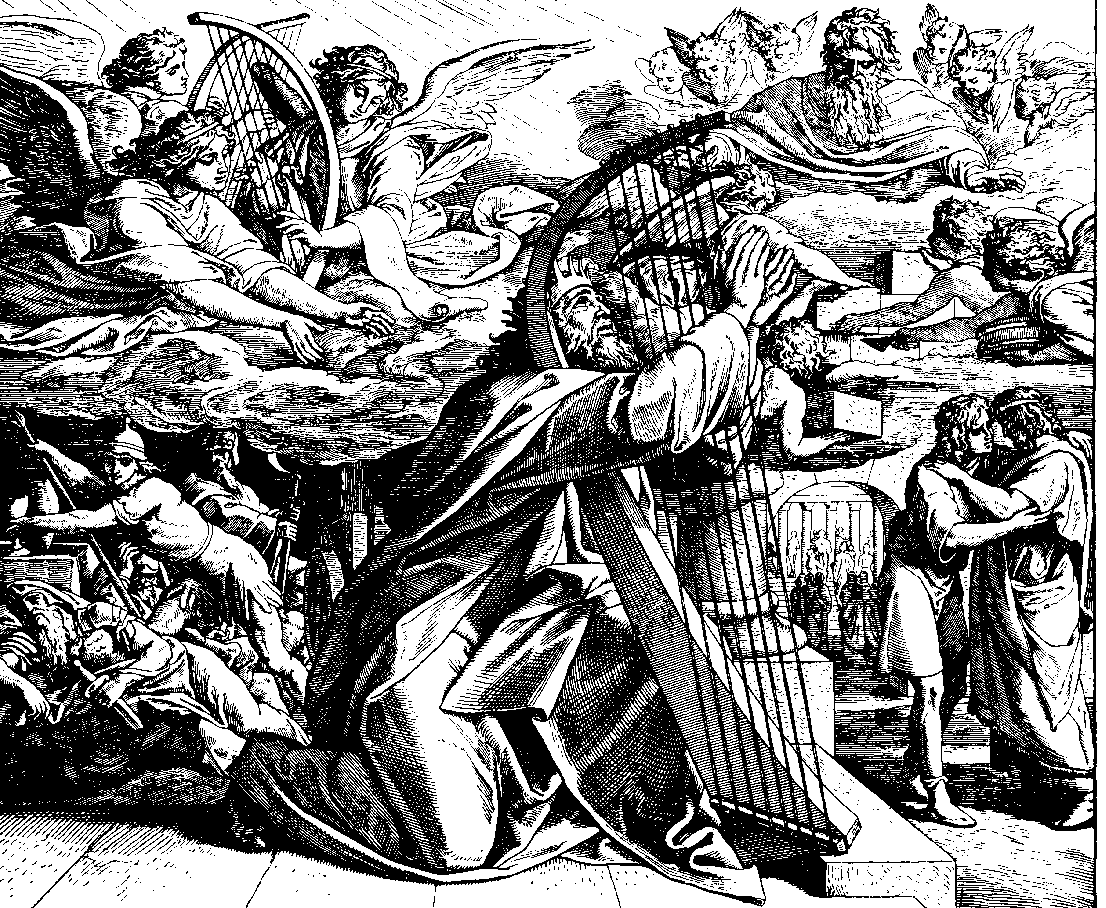
The Psalms were not crafted for Consumers. They were crafted for the Consecrated. They were crafted for a people joined by baptism, not the bottom line. This is precisely why the Church cannot take its cues from the Worship Industry.
To be honest, I’ve had to learn this the hard way through over 20 years of serving and leading on worship teams.
I was captivated by the possibilities of economic success that may have been attainable through continued imitation of the Industry. Yet as I tried to serve the local church, tension and dissonance kept occurring that I couldn’t put my finger on.
I would speak with wiser heads and hear from them about serving the church, but it was confusing because of the implicit conversation every one of us was engaged in with the Worship Industry’s ubiquitous presence: “you too could write a ‘hit’ song with your local church.”6
When I began to untangle the difference between the Church being the Church formed in our baptism, and the Industry being a corporate entity shaped by profit, I started to see that what was called “worship” in these two spaces was not the same thing.
This insight has helped me take what might be useful for my congregation’s worship practice without depending on the Industry to shape my imagination for what worship is. And I hope this differentiation I’ve described is helpful for you, too.
A Few Possibilities
So where do we go from here? Throw out all our Hillsong albums and return to Gregorian Chant? Probably not.
We’re so culturally removed from those spaces that it would be neither pastorally wise nor contextually appropriate for us to be the church in our day and age.
Here are a couple of practical thoughts that may help, though:
1. Use what works
By all means, use songs that are helpful to shape the worship life of your church from well-known artists and churches. Some of those songs have become part of the Church’s practice of worship because they are so helpful for forming our worship. Don’t lose those songs! But also…
2. Give voice to the margins
You will also need to work hard to find songs that shape your singing more holistically. You may even ask those in your church on the margins: "What kind of songs do you find helpful?”
You usually won’t find those songs in the CCLI Top 100. They don’t get featured on Apple Music and Spotify worship playlists. They don’t find their way into your social media algorithms. You may find some alternative, independent artists or churches who are trying to write other kinds of music. You’ll have to dig for the gold.
3. Be a local psalmist
You may find people in your own church who want to help write songs just for your church. They may never get recorded, they may never reach another church. But they would be significant if they shaped the worshipping life of your church community in a way the Industry never could.
What might it be like to write a song with someone about their journey with God through a sickness that they don’t get healed from? Someone who is living under financial pressure? Someone who has experienced racial profiling? What might it be like to write songs from the bottom? This is not so we can create something fresh that can sell, but so we can ensure the songs of our local church look like the Psalms.
Conclusion
There are obviously other considerations beyond songs that need to be considered in this complex relationship between the Worship Industry and the Church. We certainly have other pressures we could examine in the future. But songs seem to be one crucial piece we wrestle with frequently as worship leaders that needs to be talked about more.
So don’t imitate the Industry. Be the Church.
Keep the conversation going. Let me know what you think, how these distinctions are helpful or not. Or share this article with someone who would benefit from it.
Cherry, Constance M. The Worship Architect : A Blueprint for Designing Culturally Relevant and Biblically Faithful Services. Second edition. Baker Academic, 2021. - Cherry writes: “I have created this term to depict worship that takes place outside the bounds of the regular worship of local congregations. Para refers to something beyond (think “paranormal”) or alongside (think “paramilitary”) the original, primary entity. It is not greater than the primary entity; it is supplemental to it. This is how the term parachurch functions - religious organizations that are beyond or alongside the primary entity of the local church.”
Leah Payne, God Gave Rock and Roll To You, 162.
When I or others make these kinds of observations, the reply is usually something like “well, I know so and so artist or manager, and they are such a great person and a faithful Christian.” I’m not saying people in the industry aren’t sincere. I think they are sincere, and that sincerity often makes us all blind to the complex issues at play.
Daniela C. Augustine, Pentecost, Hospitality, and Transfiguration, 75
I will work on another post sometime over the summer on my understanding of what the church is and what it is not. For me, this is a significant component in navigating the relationship between the Worship Industry and worship practices in the local church.
For the nerds out there, Foucault would describe this as a “regulatory regime.” Still working on unpacking this, but I think there are significant discourses of power between Industry and Church that need to be unraveled.
Contemporary evangelical worship is the latest iteration of revivalism/campaign evangelism. D. L. Moody had Ira Sankey, a songwriter who used the contemporary forms of his day to gather a crowd so Moody could preach to the masses. Moody inherited this from the Methodist Camp Meetings and the pattern continued with Billy Sunday/Rodeheaver through Billy Graham/Cliff Barrows. How different is this from what happened in the Jesus movement and now with the mega church thing?
Evangelists left “regulated worship” for their outreach gatherings but did not plan on these gatherings to become the church. But these gatherings did become the church and continue to be. The model of star preacher plus song leader using the popular musical vernacular of the day has a history of at least 150 years.
If we returned to the basic outline of Christian worship, centered on prayer, lectionary, preaching, and Eucharist, with psalmists being servants to that structure rather than the other way round, it would solve so much. We need to return to having Jesus being the star as he is revealed to us in the word and sacrament, not the preacher or worship band.
Andrew, no notes. This is so well done. I had to just pause a couple times because I think you saying what needs to be said. I appreciate the depth in how this affects the local church and the real local people.
I loved the language you used: “Be a local psalmist”. I love this for those in the gifting of ministering in worship and I love this for every person because I think every follower of Jesus should be allowing themselves to be formed by the psalm and how it becomes infused into their own life of prayer.
Many many thoughts.